Saturday, 18 February 2012

Exercise classes – 2012

Kettlebells
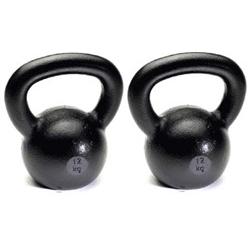
As you may have seen on a previous post we have recently introduced Kettlebells into our class timetables on a Monday, Tuesday, Wednesday and Friday. It is a 45 minute class, the first 15 minutes are focused on improving and perfecting your technique and the final 30 are focused on non-stop Kettlebells! This class is for anyone, beginners, intermediates and advanced ‘kettlebellers’! With its cardio and strength training it is the perfect weight loss and toning exercise class. 


Zumba
We have also introduced Zumba into our timetable at TSC, on a Monday, Wednesday and Thursday.  Dancers & Non-dancers a like, can come along to this party like atmosphere. Before you know it you will be dancing away and burning calories. This easy to follow cardio-based dance workout will help sculpt and tone your entire body, with many celebrities and famous faces now partaking in Zumba it is spreading fast all over the world. 
Party away to a new you!

FAQ’s
·         Does it cost extra?
The majority of the classes that are ran here at TSC are all included in your membership.
·         I’m a beginner?
Not an issue.  With our experienced and qualified instructors running your class, you’ll find the intensity will be adjusted to suit everyone’s personal needs.
·         How do I book a space in a class?
You can either call TSC to book yourself into a class, or ask on the front desk when you next visit.  We ask that you book 7 days in advance, to be sure that you can secure your space in a class.
·         What classes are on at TSC?
At Tonbridge School our class list is on the website, to view the latest class lists follow this link to our website: www.tonbridge-school.co.uk/club/timetables
·         Do I need any equipment?
All the equipment for your class is provided, however in some classes you may benefit from bringing some additional training gear.  Please contact staff for more info.
·         What do I wear?
General gym clothing, such as sturdy trainers, shorts or tracksuit bottoms and a training top.  Try to avoid excess clothing, e.g. chunky jumpers or tracksuit bottoms.  This could affect you by it getting in the way during exercise or not allowing heat to escape from your body.

If you have any other questions please either comment on this blog post or contact TSC with your question.


Saturday, 4 February 2012

5 Fat Loss Tips to Kick Start the New Year

1.       Plan, Plan, Plan and do some more Planning
Make sure you know what you are going to eat tomorrow, the next day and the next day.
“He, who fails to plan, plans to fail.” Do not rely on your will power planning is a far more effective tool to ensure you succeed!

2.       Scenarios contemplation
Write a list of any upcoming evening events, nights out, dinner parties and weddings you have planned over the next two months that may interfere with your healthy eating regime (some may be fictional hypothetical scenarios) Try to foresee how you could deal with each situation/write down how you would deal with the potential/planned scenario.
E.g. your work colleagues invite you out for a spontaneous Chinese after work. If I’m invited out for a meal I will……
A) Eat before I go out and choose a small healthy option
B) Phone up the restaurant in advance and find out what healthy dishes they have
C) Not go
If you have thought about every possible scenario then you will know what to do before             the event is even arranged. This may seem excessive but it is well worth it and will help reinforce sensible choices without having to think about them when any scenario arises.
3.       Eat clean
Avoid consuming alcohol, caffeine and sugar and processed foods. When you go to the supermarket make sure your stuffing your trolley with fresh fruit, vegetables, lean meats (chicken/turkey/seafood). Avoid anything packaged and focus on home cooking, if it’s not natural steer clear.  Cook and prepare food for the next day when needed and doubling up when making meals can provide and ideal meal for the following day. No excuses, this is one very important step needed in getting you the fat loss results you want.

4.       Regular Workouts
Vary your workouts and try to train a minimum of four times per week. By including Endurance sessions, Intervals sessions and fartlek training on the cardio kit you will keep your body working hard whenever you walk in. Include body weight resistance work as well to help recruit many muscles when exercising and improving core strength and your metabolism!

5.       Believe in yourself
Believe you can get to where you want to be. Use this motivation to help you stick to the above steps and get the success you want!

For more help/motivation with your fat loss goals please speak to or email
Daniel Byrne: djb@tonbridge-school.org
Tonbridge School Centre Personal Trainer

Sunday, 29 January 2012

Simple cardio workout

I didn’t have a lot of time to train today, about 30 minutes maximum. When you have very little time to train, the most efficient form off exercise is circuit training or intervals. With these types of training modes, you work at a maximal effort for short periods. Rest is kept low and exercises combined, to allow for more to be squeezed in.

I did the following:

Warm up:
  • Kettlebell swings x 30 reps + 50 metre sprint at about 50% of maximum pace
  • Single arm kettlebell cleans x 15 per side + 75 metre sprint at 50% of max pace
  • Single arm kettlebell snatches x 12 per side + 100 metre sprint at 75% of max pace
Each set had a quick rest in between

Main session:
  • Two-arm kettlebell swings x 30 + 100 metre sprint
  • Two-arm Kettlebell cleans X 20 + 100 metre sprint
  • Two-arm kettlebell push press x 15 + 100 metre sprint
  • Two-arm kettlebell snatch x 15 + 100 metre sprint
Each set had a quick rest in between

Finisher:
  • 5 x two-arm snatches + 5 x two-arm push presses + 5 times cleans + 5 times swings (basically working from top to bottom) then one last 100 metre sprint.

Cooldown:
  • Slow walk and quick stretch.

When you are sprinting, you demand a lot from your body. These demands not only make these forms of cardio good for fat burning but also for building muscle. Look at 100 metre sprinters. The best physiques around, but they don’t do any long distance work.

Friday, 27 January 2012

Full Body Stretch

Stretches
When performing every stretch try to ensure that the muscles are warm and that you are in the correct position for each stretch. Move into the stretch until the muscle lengthens and sensation mild/moderate discomfort is felt. If the stretch eases off then go a little bit further mind stretch. Hold the stretch for a total of 20-40 seconds. Never stretch quickly or bounce in a stretch.
Calf
– back of lower leg
-         One leg at a time
-         Put toe/ball of foot on top of a raised surface
-         Keep heel on the floor
-         Keep leg straight
-         Move hips forwards towards raised surface
Hamstring 1
 – back of upper leg
-         Standing up put one leg forward keeping the weight on the back leg
-         Front leg stays straight
-         “sit down” into the stretch  sticking your bum out and leaning forwards form the hips
Hamstring 2
– back of leg
-         Feet over shoulders width apart
-         Keeping legs very slightly bent
-         Reach down towards one foot with the opposite hand
-         Slowly return to an upright position when finished
Adductors/groin
– inner thigh
-         Feet over shoulders width apart
-         Hips move back slightly
-         Transfer the weight to one leg moving hips closer towards the ground
-         Keeping one leg straight at all times
Quad
– front of upper leg
-         Transfer the weight to one leg and get balanced
-         Bend one leg up heel towards the bum
-         Hold with one hand and pull up to assist
-         Do not lean forward from the hips
Psoas
– front of pelvis
-         Take one long stride
-         Keep shoulders/back upright
-         Move hips forwards and down towards the ground
-         (only small movement necessary )
Gluets/Piriformis
 – backside
-         Sit down on chair
-         Position one ankle on one knee
-         Slowly lean forwards from the hips brining the shoulders towards the floor
QL/ES
– lower back
-         Sit down on chair
-         Legs slightly wider than shoulders width apart
-         Leaning forward from the hips
-         Slowly pull on the chair legs if necessary
-         Return to upright slowly

Traps/Rhomboids/Posterior Dealt  - middle back 
-         Sit down on chair
-         Overlap (not interlock) hands
-         Big push forwards bringing hands away from the body rounding the upper back
-         Head relaxing forward

Latissimus dorsi/obliques –
Side of body
-         Find an immovable object
-         Grip with one hand just over waist height high
-         Drop shoulders down leaning forward from the hips
-         Move shoulder back away from the object and out to the side without moving your hips
-         Ensure your grip is ok throughout the whole stretch

Pecs/anterior deltoid
- Chest and front of shoulder
-         Find an immovable object
-         Position arm behind object with elbow at about shoulder height
-         Move shoulder of the bent arm forward until the stretch is felt
Triceps
- back of upper arm
-         Raise one arm up above head
-         Bring palm of hand down behind neck
-         Use opposite arm to assist by pushing elbow allowing hand to move further down until stretch is felt
-         You can use a wall to assist if you cannot reach your elbow
Biceps
- Front of upper arm
-         Find an immovable object
-         Keeping arm straight position hand side on against object
-         Rotate torso away from the arm until stretch is felt
Forearm
- lower arm
-         Position hands palm down on floor
-         Sit back until stretch is felt down the front of the arms
-         Can also be performed on a raised surface such as a desk or bench


For more help/motivation with your flexibility goals please speak to or email
Daniel Byrne: djb@tonbridge-school.org
Tonbridge School Centre Personal Trainer

Thursday, 19 January 2012

Try different reps for different muscle fibres

When you are training your legs, you should choose a rep range to suit the muscle fibre composition. Most standard rep ranges for beginners will be between 8 and 12 reps for the majority of body parts. This is fine to start with with. Once you move beyond the early stages of training, you need to start altering your reps per set to create the required stimulus depending on the muscle you are hitting.

A prime example would be the leg muscles:

  • The quadriceps in the front of the thigh are slightly more slow twitch. By slow twitch, we mean they are made of more slow twitch muscle fibres that are designed for more endurance based training. Don't go and run a marathon, but instead try lifting heavy for sets of 15-20 reps on your squats.
  • The hamstrings in the back of the leg are predominantly fast twitch. You should be doing deadlifts with reps of 8 and below. The same applies for cleans and snatches, which 5 reps or less work well for. Jo Defranco, a world renownded strength coach, says to build big hamstrings you should do more sprints. Sprinting is explosive and this proves the point i'm trying to make.
  • The calves are similar to the quads. The calves take a beating most of the day when we walk, run, play sport. So when training the calves, use a high rep range and a large volume. Most people's calves don't grow, simply because they don't do enough sets or reps, or simply don't concentrate on them as much as their biceps!! Hit 5 sets of 20 reps with a heavy weight. Lately, I have been doing sets of 15-20 calf raises between every other sets of leg exercises.

Try this:

  1. Squats 2-3 sets of 15 reps
  2. Stiff leg deadlifts 4 sets of 8 reps
  3. Calf raises 5 sets of 20 reps

Sunday, 15 January 2012

Weight-Loss Made Simple!


With the internet providing us with seemingly endless reams of information it’s no wonder that the modern day exercise enthusiast can get completely lost when trying to find information on losing weight. With so many different regimes and new revolutionary products I empathise with the majority of people. It’s easy to get lost between all the different diets; high protein, low glycaemic, acai berry, low fat, every two hours of the day and who knows what else!

Putting this information aside there is one basic principle which, when applied correctly, could help every single individual in the whole world who is struggling to lose weight make a change. This very simple principle is called your energy balance. An individual’s energy balance put simply is the amount of energy one person consumes vs. the amount of energy expended. When energy consumed is equal to energy expended an individual’s weight remains constant.

So if you find you have been gradually gaining weight over a period of time then this is due to a change in one of the above factors. You are either eating slightly more or expending slightly less or both; either way the small daily surplus builds up and is stored by the body as adipose tissue (fat).

To achieve sensible weight loss of 1-3lbs per week you need to create a DAILY DEFICIT of around 500-700 calories. This deficit will cause the body to use stored energy (including body fat).      


For more help/motivation with working out your own daily expenditure for weight loss please speak to or email

Daniel Byrne: djb@tonridge-school.org
Tonbridge School Centre Personal Trainer